Month: May 2011

  • Maker Faire Recap

    This past weekend Ollie and I exhibited at Maker Faire in San Francisco.

    mf

    Many of my favorite organizations were there, Exploratorium, Spark Fun, Digikey, Lego, Etsy, Instructables, Google, NASA (!!!)…. and many smaller individuals who haven’t yet grown into largeish organizations, MaceTech, Ira Sherman (chastity belts!!!), Sensebridge, Mark Lottor.

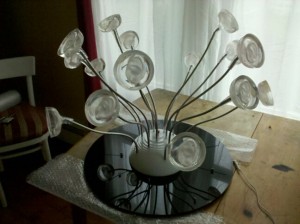
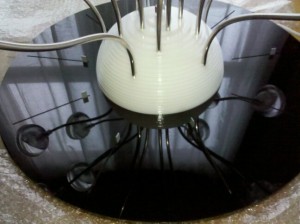
    Setup was very easy- we shipped three gigantic boxes directly to Maker Faire. Our booth contained only three pieces, 2 radiation detectors and a new piece that has an analog lighting control that I’ve been writing about recently. Arduino-free artwork!
    ear lamp 1

    ear 2

    ear

    The organizers of Maker Faire treated the Makers awesomely. Check out the Paella that was provided for us.

    paella

    Here are some of the highlights.
    Sally Ng is an Industrial designer who has won a bunch of design awards. I was really impressed with these portion control plates, both with the concept and with the execution. She has them in a red color, but they were stolen from her last show. Sort of a double edged compliment I think.
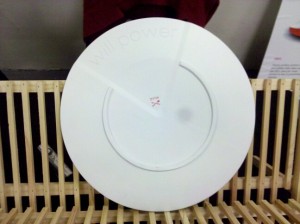
    Sally Ng

    sn

    I unfortunately didn’t get a chance to hang out at the Google (blog link here) area. They were showing off their SketchUp software and the Android software development kit. I heard something about self driving cars, which hopefully they will be ready to show soon!

    google

    Arc Attack is a Tesla Coil performance that incorporates music and light. It’s really fun to watch…. once or twice. We were placed right next to the stage where the performance happened six times a day. The result was that we got a ton of traffic (thank you Arc Attack!), but it was also loud!
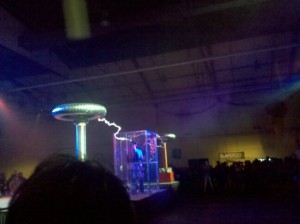
    arcattack

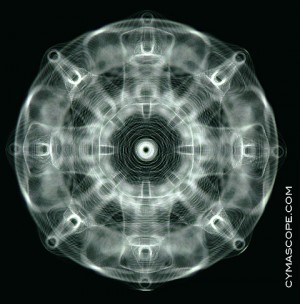
    Erik Larson stopped by our booth. He designs CymaScopes. This is a type of scientific instrumentation that make sound waves visible in water. I had never seen this kind of instrument before and I am blown away by the gorgeousness of the results. I only saw pictures on Erik’s phone and I plan to find somewhere to view this in real life ASAP. Here are some pictures that I snagged from the company’s website.
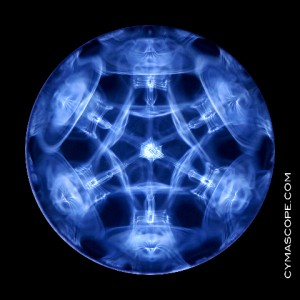
    erik larson

    erik larson

    We visited the Exploratorium museum while I was in San Francisco. The exhibits were cool, but they saved the coolest ones for Maker Faire. One of the best pieces they showed is called Harmony Swingset, a prototype by Earl Stirling. The lengths of the swings are cut so that they are harmonically tuned to each other. When people swing on them, it looks like a wave going down the line. A video shows this best …flash forward to 1:35.


    My friend Brian Malovany was there with his Lego Van. I went to visit him once during the show and he was mobbed with children.

    Lego Van

    I will close this post with a photo of a sign with a partial quote from Barack Obama’s Inaugural address.
    Here’s a link to the full speech.

    sign


  • 555 timer lighting controls and a wee bit of silicone casting

    I am not so confident about my newest project. For one thing, it encompasses a number of unrelated processes, all of which have a failure factor. Mold making, casting, laser cutting, tube bending and of course circuit design.

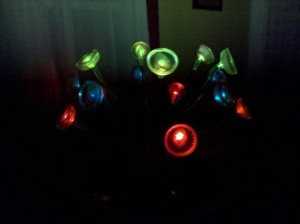
    The concept is that there is a stepped white acrylic base, with stainless steel tubing coming out in all directions like flower stems. The flowers sit atop the stainless steel tubing and are clear silicone castings with LEDs inside them. The LEDs change colors by way of slider switch controls.

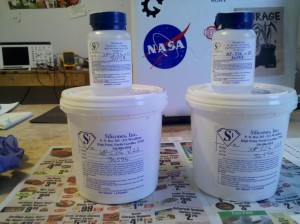
    I am writing this while listening to my silicone de-gass in the vacuum bell jar. The silicone was manufactured at Silicones Inc. and I am not familiar with it, so I am going to get unexpected results. The silicone is water-clear and Andre, the silicone distributor I use tells me one of his customers made a gigantic bullet (!!) and shone lights through it.
    Silicones Inc. was nice enough to send me 12 pounds of sample material, 6 pounds each of XP-536 V22 and V23. Which makes me wonder what the other 21 Versions were like. I’m not even sure if they sell the XP-536 regularly because a batch was mixed in the lab to ship to me.
    I’m casting tonight, so in about 30 hours I will know if I like the product or not (30 hour cure time, which is unusually long). UPDATE: LOVE THE SILICONE!!
    sil

    I spent the day soldering a lighting controller circuit board. No software!
    The circuit has 9 slider switches, 15 LEDs, 3 555 timers and 3 556 timers (2 555s in one package). Also a bunch of resistors and capacitors.
    Here’s the schematic in Google docs format
    Email me if you want a better copy.


  • CLEO conference – lasers are cool

    Last week I worked at the CLEO conference in Baltimore, Maryland. It was a fun week- it was nice and sunny, I got a stylee ride both ways (one way in Diesel Jetta & the other in Nissan Hybrid) and ate some really good seafood.
    The CLEO conference is a trade show and conference about lasers and optics. When I think about lasers I remember Pink Floyd concerts at the planetarium in New York City. Laser facials, hair removal, light pens. Pretty and prettifying.
    The lasers shown at this conference are used in some really interesting applications.
    Daylight Solutions was showing how they use lasers to detect chemical agents in the air. A doctor might use one of their lasers to look at one’s breath and then analyze it for healthful or unhealthful components. Think reeeeeally expensive breathalyzer test.
    Some of the lasers are high power and short pulse, which creates a lot of energy for cutting and also high precision. IMRA has femtosecond lasers which means that they pulse at one quadrillionth of a second!! The shorter the pulse, the more accurate the cut and that is why this type of laser is used in laser eye surgery.
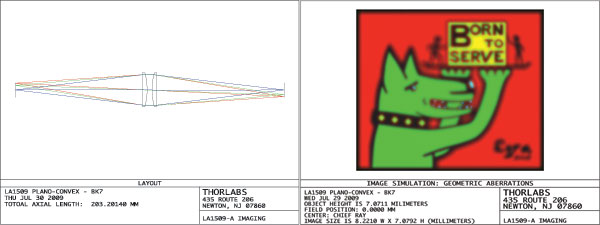
    My favorite booth was Thorlabs. Thorlabs sells pretty much everything to do with optics holders, accessories, motion control and some other stuff I’ve never seen before. They had a really nice booth setup with lots of helpful and smart people who showed me everything until my brain hurt.
    Shown below is their awesome logo before the logo is optimized with one of their lenses.

    dog


  • Analog lighting control and the LED

    Do you have dimmer switches on your incandescent lights?
    They used to be basically a resistor that controls the current going to the filament in your bulb. The filament is the little coiled wire inside of the bulb. As current is put into the filament, it is released as heat. When a wire gets really hot, it turns red. This is what you’re seeing when you turn on an incandescent.
    As you turn the dimmer switch (think potentiometer), the current going to the filament is reduced and the light gets less hot and dimmer. Or the current is increased as the potentiometer decreases in value and the light gets hotter and brighter.


    According to How Stuff Works, the new and improved way is to pulse power to the filament, using the sine wave characteristic of AC power to switch the current on and off. It’s a great article … I love How Stuff Works!

    LEDs can’t really be controlled in the same way, unfortunately. The reason for this is that they are not a resistive device. The incandescent bulb uses heat to make light, but an LED that gets too hot will just die.
    There is a limit to its brightness.
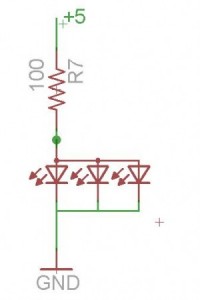
    Here’s a super simple circuit to illustrate what I mean. There are three LEDs there because it is a RGB in one package. That means there is a red, a blue and a green LED all in the same circuit.
    pp
    This circuit is designed for about 20 mA, which is what the LED specifications say. If you run more than 20 mA through the LED continuously, the LED will get hot and die.

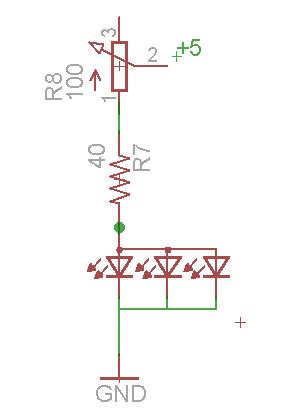
    So I’m going to cheat a little bit, run more than 20 mA through the LED but limit it with this circuit. I’ll use the potentiometer to turn the amount of current up or down. The big problem with this circuit is that you can’t turn the LED OFF. Even if you did turn it off by making the resistance very very high, a potentiometer in the Mohm range is big and expensive.
    pot

    The solution is to pulse the current to the LED. While the current is on, the LED is on, and while it is off, the LED is off. While the LED is off it has a chance to cool down. However, the human eye keeps the image of the on LED for about a 25th of a second, which tricks the brain into thinking it is always on if the LED is pulsed at that rate or higher.